• Link to Instagram
  • Link to Facebook
  • Link to Youtube
  • Sign Up For Our Newsletter And Get A Free Foraging Guide!
Found Food
  • Home
  • Foraging Books
    • The Wild Mixologist: Cocktails & Mocktails
    • The Bushcrafter’s Guide to Foraging
    • UK Seasonal Foraging Books
    • The Forager’s Introduction to Botany
  • Online Courses
    • Getting Started Foraging for Wild Food
    • Wild Food & ID Masterclass
    • Wild Cocktails Course
  • Book Foraging Experiences
  • About
    • FAQs
    • The Association of Foragers
    • Testimonials
    • Blog
  • Contact Us
  • Click to open the search input field Click to open the search input field Search
  • Menu Menu

Tree Fungus in Epping Forest
2017, February, Fungus

On one of my now frequent visits to Epping Forest, I had no intentions of foraging, just out for exercise; However, I just happened to come across quite a lot of tree fungus in Epping forest this time. Both easily identifiable, and (at least for me) unidentifiable.

Birch Polypore

So the first thing I cam across was a dead Birch tree, which had quite a lot of Birch Polypore (Pitptoporus betulinus). Piptoporus comes from the latin meaning ‘pores cast down’ and betulinus from its host tree, the birch.
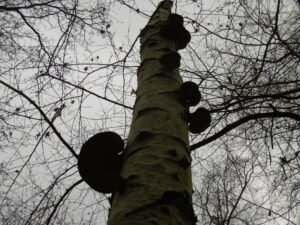
Birch tree with Birch Polypore
Dead Birch tree with Birch Polypore

It’s easy to identify. It’s brown on the top, and white on the bottom. From the name, unlike other mushrooms, it doesn’t have gills on the bottom for spreading its pores, it has lots of tiny holes instead. It’s only found on dead or dying Birch trees, and it erupts directly from the truck in a bracket shape (also a horseshoe shape at one stage in its development).

It turns out that Birch Polypore is an amazing resource when it comes to found food; It is edible, but can be a little bitter, however, it is much more useful as a medicinal item. The Birch Polypore makes an immune tonic which is anti-inflammatory, anti-tumour, anti-parasitic, anti-septic, anti-viral, anti-bacterial, styptic. I’ve written a separate and full article about the health benefits here…

Jew’s Ears

I’ve been keeping an eye out for these for ages now, and not had any luck. They grow on Elder, and my favourite garden plant is our Elder tree. I’ve had plenty of use out of the flowers and berries. Also, on my first guided foraging walk, the instructor showed them and told us all about them. On top of all that, I knew that there were a fair few Elder in and around Epping Forest.

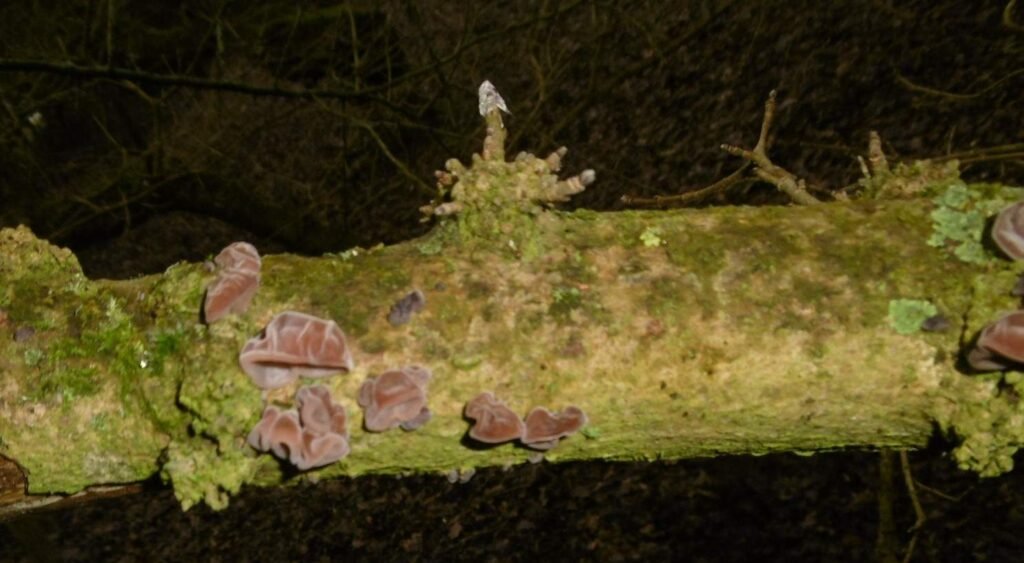
I was actually rushing back to the car, having stayed a little longer than expected, so I apologise for the poor quality of the pictures.

Jew’s Ears on Elder

Apparently, the politically correct name for them now is Jelly Ears,  but I know them as Jew’s Ears so that’s the name that I’ll be using.

Like the Birch Polypore, this one is quite easy to identify and not easy to confuse with anything else. It has a slightly rubbery, jelly-like texture, and turns in on itself like an ear. It’s a sort of leathery-pink colour (a bit like skin) and as far as I’m aware, it’s mostly found on Elder trees, so that’s a good giveaway.
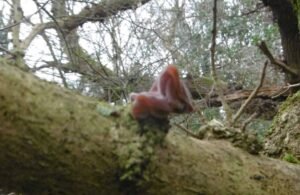
Jew’s Ear Fungus

If you’ve ever eaten Chinese food, there’s a good chance that you’ve eaten these in a meal. They can also be picked, wiped clean and eaten raw. They’re fairly tasteless, and a little chewy, so quite useful as a natural gum to chew on. I’ve done a more in-depth article about them here…

Not so easily identified

On a huge fallen oak, I saw this rather unattractive fungus.

Black Witches Butter

I’ve marked it as Witches Butter, and I think that’s probably correct, but it could be either Exidia Glandulosa (Black Witches’ Butter, Black Jelly Roll, or Warty Jelly Fungus), or possibly Exidia Nigricans (Witches Butter). Either way they’re pretty disgusting looking. Apparently, they are edible similarly to Jew’s Ears in that they absorb flavours quite well in cooking. It could be a while before I give it a try.
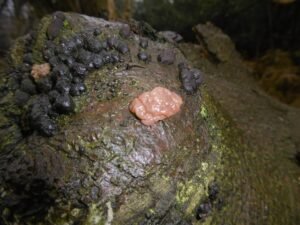
Ascotremella faginea – Jelly Brain Fungus

This Jelly brain-like fungus on the same fallen oak, is also pretty nasty looking. I found a reference to a Ascotremella faginea, and that seems to match a lot of the pictures that Google has. There doesn’t seem to be too much information on the internet for it, so I’m going to steer well clear!
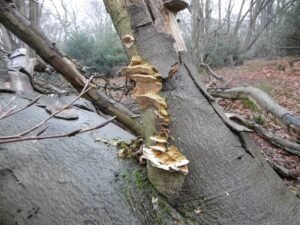
unidentified polypore? brackets on Oak

I suspect that these bracket fungus on an Oak tree were easier to identify a while ago before they started to break down.
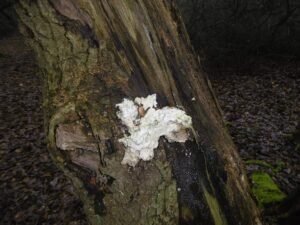
Moon poo?

There was a small pile of this in the leaves next to the tree. Probably an old Moon poo (yes, that’s really a thing!), but too far gone now to be sure.
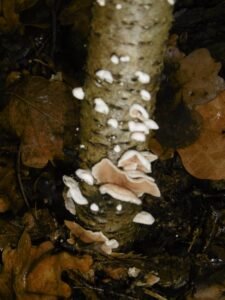
Not sure

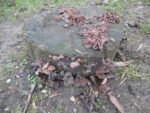
Unfortunately, the picture is a little out of focus, and you can’t see the caps of these. All I can really be sure of is that they are not polypores, because I can see the gills! Looking at the tree bark, it could be some kind of Cherry maybe? A varied, maybe Oak leaf litter around the base. Possibly Oyster mushrooms, if so that would be great, but I can’t be sure from the picture. I may have to go back and have another look, or bring one home with me.

Share this:

  • Share on Facebook (Opens in new window) Facebook
  • Share on X (Opens in new window) X

Like this:

Like Loading…

Related

13 February 2017/0 Comments/by Gavin
Tags: birch polypore, blog, Epping Forest, jelly fungus, Jew's Ear, tree fungus
Share this entry
  • Share on Facebook
  • Share on X
  • Share on WhatsApp
  • Share on LinkedIn
  • Share by Mail
https://foundfood.com/wp-content/uploads/2021/03/20170211110718.jpg 817 1486 Gavin https://foundfood.com/wp-content/uploads/2024/05/Found_Food_Foraging_newlogo-300x158.png Gavin2017-02-13 14:11:002023-12-07 12:00:18Tree Fungus in Epping Forest
You might also like
Foraging the Edges of Epping Forest in Winter
Where do I forage for free food from?
Crow Garlic dinner follow up
Himalayan Balsam – Invasive Pest or Tasty Food?
What on Earth is Bletting?
3 Things You Can Forage For In March
A Video about Crow Garlic
The Parts of a Flower
0 replies

Leave a Reply

Want to join the discussion?
Feel free to contribute!

Leave a Reply Cancel reply

Your email address will not be published. Required fields are marked *

Search Search

Categories

  • 2017
  • 2018
  • 2024
  • 2025
  • Aegopodium podograria
  • Alliaria petiolata
  • Allium
  • Allium ursinum
  • Allium vineale
  • Allium vineale
  • April
  • Artemisia vulgaris
  • Asteraceae
  • August
  • Auricularia auricula-judae
  • Autumn
  • Ballota nigra
  • Berries
  • Boletus edulis
  • Calocybe gambosa
  • Cardamine hirsuta
  • Castanea sativa
  • Chamaenerion
  • Chamaenerion
  • Chamaenerion angustifolium
  • Cirsium vulgare
  • Coastal
  • Conopodium
  • Conopodium majus
  • Coprinus comatus
  • Crataegus
  • Crataegus monogyna
  • February
  • Flowers
  • Foraging
  • Fragaria vesca
  • Fungus
  • General
  • Geranium molle
  • Glechoma
  • Glechoma hederacea
  • Grifola frondosa
  • Inula helenium
  • January
  • June
  • Juniperus
  • Lamium album
  • Lamium purpureum
  • Larix
  • Larix decidua
  • Larix larcina
  • Lavandula
  • Leaves
  • Mahonia aquifolium
  • March
  • Medicine
  • Melissa
  • Melissa officinalis
  • October
  • Onagraceae
  • Picea
  • Picea abies
  • Picea glauca
  • Picea sitchensis
  • Pinus contorta
  • Pinus strobus
  • Plants
  • Platanus x acerifolia
  • Prunella
  • Prunella vulgaris
  • Prunus
  • Prunus spinosa
  • Rabelera
  • Recipe
  • Reynoutria
  • Reynoutria japonica
  • Ribes
  • Ribes rubrum
  • Roots
  • Rosa canina
  • Rosaceae
  • Rumex acetosa
  • Rumex crispus
  • Sambucus nigra
  • Sarcoscypha coccinea
  • Sequoia
  • Sequoia sempervirens
  • Sequoiadendron
  • Silene
  • Silene dioica
  • Smyrnium olusatrum
  • Solanum
  • Solanum americanum
  • Spring
  • Stachys
  • Stachys sylvatica
  • Stellaria
  • Stellaria media
  • Stellaria nemorum
  • Summer
  • Survival
  • Symphytum officinale
  • Symphytum x uplandicum
  • Taraxacum
  • Taraxacum officinale
  • Thuja occidentalis
  • Thuja plicata
  • Tilia
  • Tilia cordata
  • Tree
  • Tsuga
  • Tsuga canadensis
  • Tsuga heterophylla
  • Tussilago farfara
  • Typha angustifolia
  • Typha latifolia
  • Uncategorised
  • Urtica dioica
  • Urticaceae
  • Video
  • wildlife
  • Winter
Privacy & Cookies: This site uses cookies. By continuing to use this website, you agree to their use.

To find out more, including how to control cookies, see here: Cookie Policy

FoundFood

  • Home
  • Contact
  • About

Helper Sites

  • The Forager Helper
  • The Wild Herbalist Helper (coming soon…)

Courses and Walks

    • Face-to-face experiences
    • Private events
    • Online Courses
    • FREE Weekly Foraging Zoom Calls


Publications

    • Publications
    • Newsletter


Trustpilot
© Copyright - Found Food
  • Link to Instagram
  • Link to Facebook
  • Link to Youtube
  • Terms of Service
  • Privacy Policy
Link to: Judas’ Ear Mushroom (Auricularia auricula-judae) Link to: Judas’ Ear Mushroom (Auricularia auricula-judae) Judas’ Ear Mushroom (Auricularia auricula-judae) Link to: Identifying Trees in Winter Link to: Identifying Trees in Winter Identifying Trees in Winter
Scroll to top Scroll to top Scroll to top

This site uses cookies. By continuing to browse the site, you are agreeing to our use of cookies.

Accept settingsHide notification onlySettings

Cookie and Privacy Settings


How we use cookies

We may request cookies to be set on your device. We use cookies to let us know when you visit our websites, how you interact with us, to enrich your user experience, and to customize your relationship with our website.

Click on the different category headings to find out more. You can also change some of your preferences. Note that blocking some types of cookies may impact your experience on our websites and the services we are able to offer.

Essential Website Cookies

These cookies are strictly necessary to provide you with services available through our website and to use some of its features.

Because these cookies are strictly necessary to deliver the website, refusing them will have impact how our site functions. You always can block or delete cookies by changing your browser settings and force blocking all cookies on this website. But this will always prompt you to accept/refuse cookies when revisiting our site.

We fully respect if you want to refuse cookies but to avoid asking you again and again kindly allow us to store a cookie for that. You are free to opt out any time or opt in for other cookies to get a better experience. If you refuse cookies we will remove all set cookies in our domain.

We provide you with a list of stored cookies on your computer in our domain so you can check what we stored. Due to security reasons we are not able to show or modify cookies from other domains. You can check these in your browser security settings.

Other external services

We also use different external services like Google Webfonts, Google Maps, and external Video providers. Since these providers may collect personal data like your IP address we allow you to block them here. Please be aware that this might heavily reduce the functionality and appearance of our site. Changes will take effect once you reload the page.

Google Webfont Settings:

Google Map Settings:

Google reCaptcha Settings:

Vimeo and Youtube video embeds:

Privacy Policy

You can read about our cookies and privacy settings in detail on our Privacy Policy Page.

Privacy Policy
Accept settingsHide notification only

Loading Comments...

    %d