• Link to Instagram
  • Link to Facebook
  • Link to Youtube
  • Sign Up For Our Newsletter And Get A Free Foraging Guide!
Found Food
  • Home
  • Foraging Books
    • The Wild Mixologist: Cocktails & Mocktails
    • The Bushcrafter’s Guide to Foraging
    • UK Seasonal Foraging Books
    • The Forager’s Introduction to Botany
  • Online Courses
    • Getting Started Foraging for Wild Food
    • Wild Food & ID Masterclass
    • Wild Cocktails Course
  • Book Foraging Experiences
  • About
    • FAQs
    • The Association of Foragers
    • Testimonials
    • Blog
  • Contact Us
  • Click to open the search input field Click to open the search input field Search
  • Menu Menu

Not a banana – plantain herb

Flowers, Foraging, Leaves, Medicine, Plants, Recipe, Spring, Summer

Spring is well and truly sprung and the perennial weeds are popping up everywhere, much to the disgust of proud gardeners and allotment owners. A lot of the weeds have medicinal and edible uses, but some are better than others, and frankly some of them are little more than wild salad “fillers”. However, there’s one particular genus/group of prevalent weeds with medicinal qualities, nutritional benefits and they actually have a taste worth looking for too. It’s the plantain herb (genus Plantago), also known as fleaworts.

As the title suggests, I often find myself saying “it’s not related to the banana-like vegetable which you see at the supermarket”.
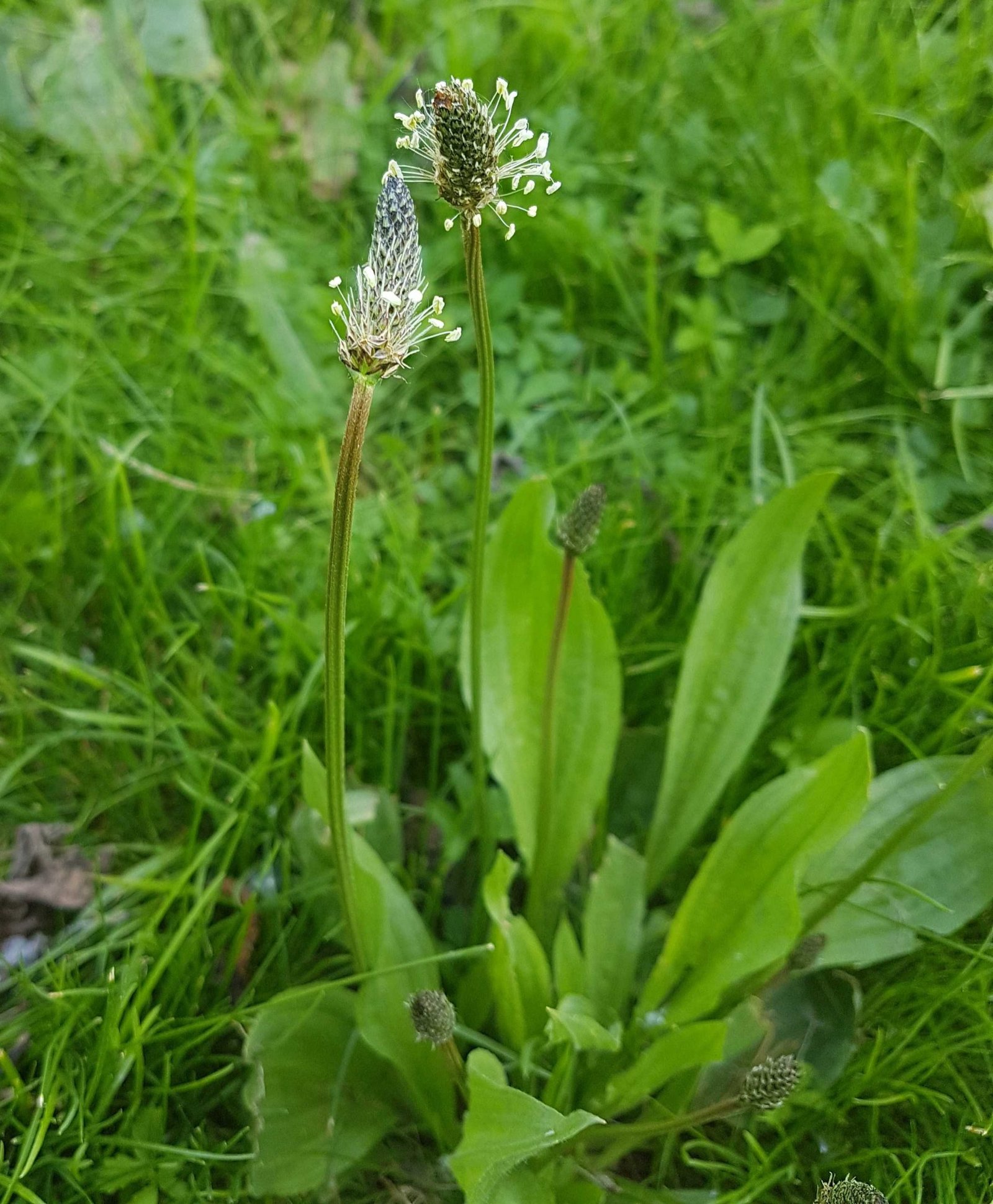
Ribwort plantain flower stalks (Plantago lanceolata)

Species

At the last count there were about 200 species in the genus, but I tend to stick with wide-spread, UK-based varieties such as Broadleaf (Plantago major), Ribwort (Plantago laceolata) and occasionally Sea (Plantago maritima) and Buckshorn (Plantago coronopus); All of which have very similar properties and uses. They all have slightly different seasons, with Broadleaf tending to pop-up first, then Ribwort a little later, and Buckshorn and Sea Plantain from about mid-summer; As with all of these things, it depends upon your location, and the current weather conditions.

Identifying plantain

It’s easy to ignore and walk all over, because it is a very common weed, and without its flower heads it blends into the grassy background easily; But once you’ve learnt to recognise it, you’ll see it everywhere. Whilst the basic leaf shapes may vary (Broadleaf has wide, round leaves; Ribwort has long, strap-like leaves), there are some features that they all have in common:

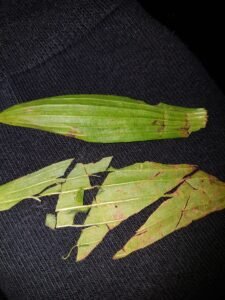
  • Parallel leaf veins – The leaf veins run from base to tip and are usually easy to see. If you’re really careful, you can tear a leaf and the ribs can stay attached so you have two halves of a leaf attached by threads.
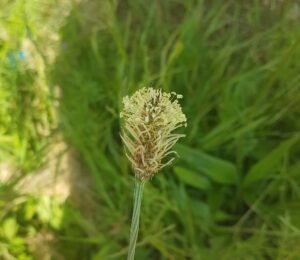
  • Flower spike – They all send up a long flower spike with tiny veins.
Eating plantain herb

General rules of foraging withstanding (look for potential contamination, condition, wash it, etc.), plantain leaves, stalks and flower heads can be eaten raw – and this is where the surprising taste comes through. At first, it’s a bit of a plain “green” taste, but give it a good chew, get your juices flowing and get it to the back of your mouth and… Mushrooms. If you’ve never tried Plantain before, you really have to give this a go; I promise you won’t be disappointed. The most intense flavour seems to come from the flower heads (they’ll be out in a few months’ time), but the leaves give the same flavour too.

Recipes

Crisps

A very quick and easy snack. Wash and dry your plantain leaves (I find that broadleaf works best for this) and put them into a shallow pan of hot oil. Don’t overcrowd the pan or they’ll just wilt and not crisp up. Give them up to 30 seconds, turning once if necessary, then drain and eat as a nice little snack. They can be salted while they’re cooling too, if you like.

Vodka

This was a mad idea I had one day of getting an earthy, mushroom flavour into cocktails. Leaves and seeds infused in vodka for 3 months, then strained. The earthy flavour counterbalances sweetness, but I find a little bitterness really lifts it. So mixed with nettle cordial for the sweetness, a few splashed of home-made bitters (or Angostura), and topped with tonic water works well.
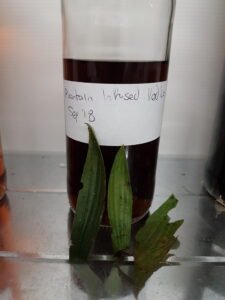
Plaintain infused vodka bitters

Plantain herb and garlic mustard risotto

This is your full recipe for this issue. Apart from the fact that it makes a really good flavour, I’ve sold this idea to learner foragers who are scared of mushroom picking – It means that you can have a mushroom and garlic risotto with no mushrooms or garlic!

Plantain herb and garlic mustard risotto

Ingredients

  • 2 tbsp oil
  • 1 large white onion
  • 4 large handfuls of plantain herb leaves, stalks and flower heads
  • 2 litres of water (to make 1 litre of stock)
  • 250g Risotto rice
  • 1 handful of garlic mustard leaves

Method

  1. Put 2 handfuls of leaves, stalks and flowers in a couple of pints of water, bring to the boil and simmer for at least 1 hour. Allow to cool and strain out the plants. Add the remaining fresh plants and simmer again for 1 hour, then strain.
  2. If the stock isn’t already reduced to 1 litre, simmer it again to reduce.
  3. Fry a chopped onion in a little oil until golden.
  4. Add the risotto rice and toss in the onion and oil.
  5. Add a little plantain stock and stir until it is soaked up.
  6. Repeat until the rice doesn’t soak up the stock any more, then put the rest of the stock in.
  7. Keep on a low heat until all the stock is gone and the rice is thick and sticky.
  8. Remove the risotto from the heat and stir your sliced garlic mustard leaves through.

NOTE: Garlic mustard leaves can have a very bitter after taste but cooking them can kill the gentle garlic flavour. We stir them through at the end like this, because a little heat tames the bitterness without destroying the garlic flavour.

Health benefits

Plantain has a long history of being used in traditional herbal medicine, and for very good reason. Modern investigations have shown most traditional uses are actually highly effective.

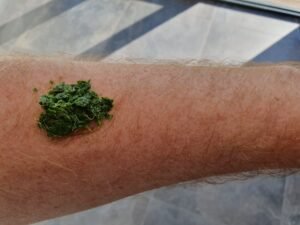
Plantain is “mucilaginous” which means that it has a soothing effect on both the skin and the mucous membranes, so it is an effective relief for burns, bites and stings, as well as on coughs, sore throats, and urinary tract infections. I’ve found that it is best used as a fresh, first-aid herb for burns, bites and stings – you can crush the leaves with a little water and apply directly; If it’s for me, I’ll chew them with a little spit and apply it. For internal injuries or issues, you can make a tea from either fresh or dried herb. Just pour hot water over the leaves and allow to infuse for 10 to 15 minutes. As well as mucilage and its soothing, anti-inflammatory ability, studies have found that Plantain contains allantoin, a substance proven to stimulate the regeneration of tissues for healing, and aucubin, with proven antibiotic actions.
Summary

To native Americans, this was known as “White man’s footprints” because it spread wherever the European settlers went. Apart from kids using it as an improvised gun, or the species Plantago psyllium used for improving digestive transit, this little weed gets largely ignored; I hope that after reading this, you’ll realise its amazing food and medicine benefits and make good use of it.

Originally published in The Bushcraft Journal Issue 25 - 2019
13 May 2020/2 Comments/by Gavin
https://foundfood.com/wp-content/uploads/2021/03/RibwortPlantain-scaled.jpg 2560 2111 Gavin https://foundfood.com/wp-content/uploads/2024/05/Found_Food_Foraging_newlogo-300x158.png Gavin2020-05-13 11:27:482023-12-07 12:00:13Not a banana – plantain herb

Himalayan Balsam – Invasive Pest or Tasty Food?

2017, August, Flowers, Plants, Summer

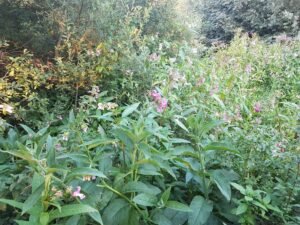
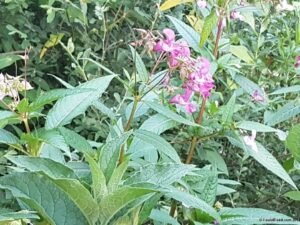
I was out for a walk around the Lee Valley last night, particularly looking out for Elderberries and Yarrow for some home-brewing projects I have planned. I found what I needed, but I could help also noticing the huge amounts of pink flowering Himalayan Balsam along the river’s edge just about everywhere.

Himalayan Balsam

Whilst it looks very pretty, it’s a controversial plant as it’s the invasive immigrant, Himalayan Balsam (Impatiens glandulifera). It is highly invasive, and tends to choke up rivers quite quickly.*

Himalayan Balsam

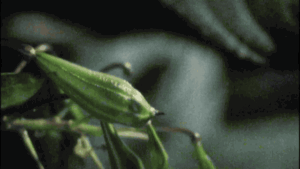
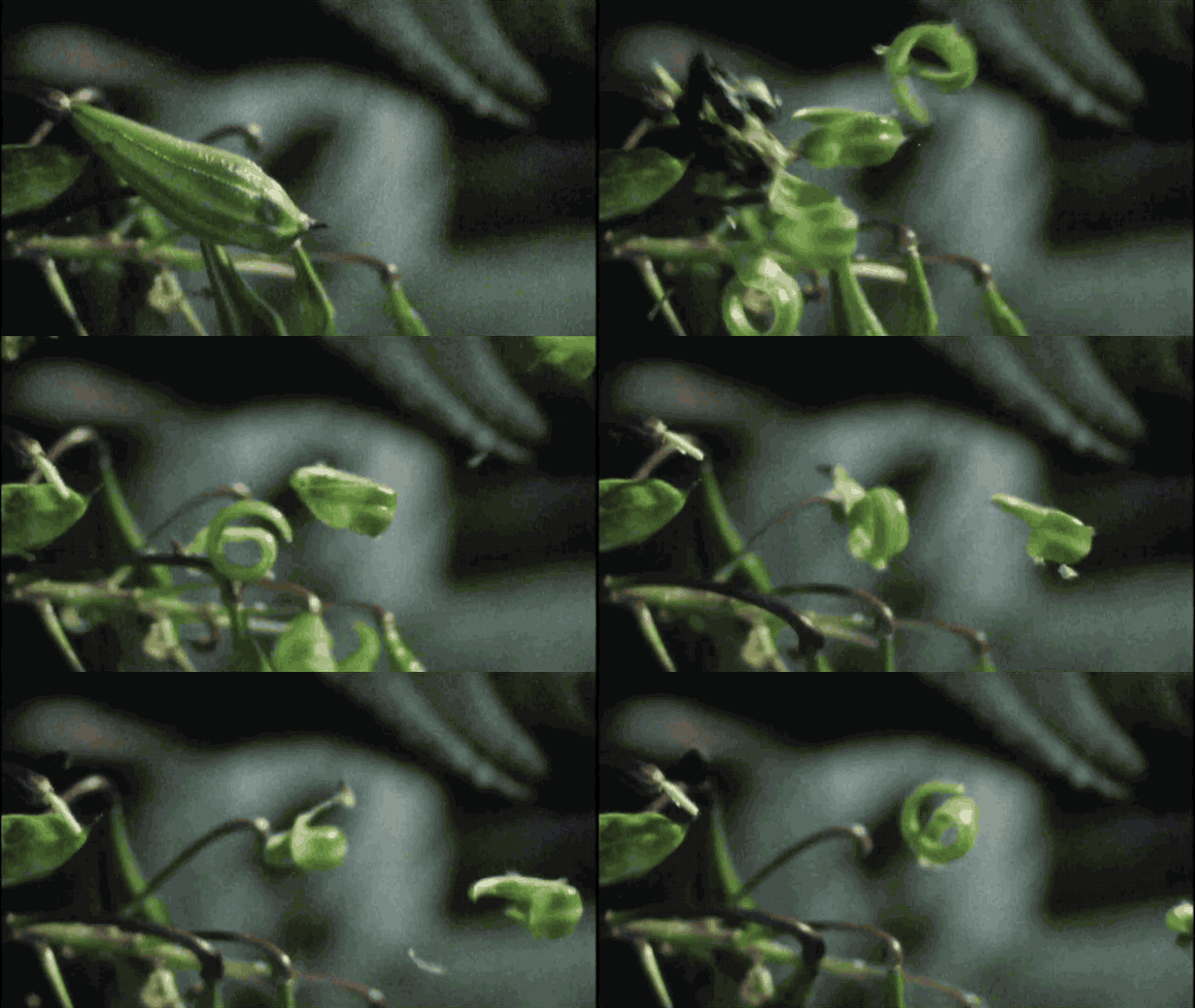
It does this with an amazing seed spreading system, which involves the seed heads ‘exploding’ and flinging the seeds up to seven feet away.

Exploding Seed Head

However, there is a positive aspect to this plant. Most of it is edible, and being in such abundance and widely hated, there is no reason not to collect some (carefully) and cook it up!

*Himalayan Balsam and the law

I’ve been asked by the Non-native Species Inspectorate, quite rightly, to point out that the transportation of seeds or whole plants of Himalayan Balsam is an offence under the Invasive Alien Species (Enforcement and Permitting) Order 2019 in England and Wales and Section 14AA of the Wildlife and Countryside Act in Scotland. This means that no seeds or plants should be removed from the site where they currently grow, and sowing seeds or planting elsewhere either deliberately or accidentally would be a particularly serious offence.

So in other words, pick it and eat it/use it where it grows, and don’t take it somewhere else!

Himalayan Balsam Recipes

A quick internet search for “Himalayan Balsam Recipes” will turn up plenty of results for you. I won’t copy them here (unless it’s to review them after I’ve given it a try), but some of the things I’ve seen include:

  • Champagne (Flowers)
  • Wine (Flowers)
  • Curry (Seeds)
  • Using the stem as a straw for drinks
  • Preserve (Flowers)
  • Falafel (Seeds)
16 August 2017/0 Comments/by Gavin
https://foundfood.com/wp-content/uploads/2021/03/Exploding-Plant-GIF-1.gif 346 615 Gavin https://foundfood.com/wp-content/uploads/2024/05/Found_Food_Foraging_newlogo-300x158.png Gavin2017-08-16 11:38:262023-12-07 12:00:15Himalayan Balsam – Invasive Pest or Tasty Food?
Privacy & Cookies: This site uses cookies. By continuing to use this website, you agree to their use.

To find out more, including how to control cookies, see here: Cookie Policy

FoundFood

  • Home
  • Contact
  • About

Helper Sites

  • The Forager Helper
  • The Wild Herbalist Helper (coming soon…)

Courses and Walks

    • Face-to-face experiences
    • Private events
    • Online Courses
    • FREE Weekly Foraging Zoom Calls


Publications

    • Publications
    • Newsletter


Trustpilot
© Copyright - Found Food
  • Link to Instagram
  • Link to Facebook
  • Link to Youtube
  • Terms of Service
  • Privacy Policy
Scroll to top Scroll to top Scroll to top

This site uses cookies. By continuing to browse the site, you are agreeing to our use of cookies.

Accept settingsHide notification onlySettings

Cookie and Privacy Settings


How we use cookies

We may request cookies to be set on your device. We use cookies to let us know when you visit our websites, how you interact with us, to enrich your user experience, and to customize your relationship with our website.

Click on the different category headings to find out more. You can also change some of your preferences. Note that blocking some types of cookies may impact your experience on our websites and the services we are able to offer.

Essential Website Cookies

These cookies are strictly necessary to provide you with services available through our website and to use some of its features.

Because these cookies are strictly necessary to deliver the website, refusing them will have impact how our site functions. You always can block or delete cookies by changing your browser settings and force blocking all cookies on this website. But this will always prompt you to accept/refuse cookies when revisiting our site.

We fully respect if you want to refuse cookies but to avoid asking you again and again kindly allow us to store a cookie for that. You are free to opt out any time or opt in for other cookies to get a better experience. If you refuse cookies we will remove all set cookies in our domain.

We provide you with a list of stored cookies on your computer in our domain so you can check what we stored. Due to security reasons we are not able to show or modify cookies from other domains. You can check these in your browser security settings.

Other external services

We also use different external services like Google Webfonts, Google Maps, and external Video providers. Since these providers may collect personal data like your IP address we allow you to block them here. Please be aware that this might heavily reduce the functionality and appearance of our site. Changes will take effect once you reload the page.

Google Webfont Settings:

Google Map Settings:

Google reCaptcha Settings:

Vimeo and Youtube video embeds:

Privacy Policy

You can read about our cookies and privacy settings in detail on our Privacy Policy Page.

Privacy Policy
Accept settingsHide notification only

Loading Comments...