• Link to Instagram
  • Link to Facebook
  • Link to Youtube
  • Sign Up For Our Newsletter And Get A Free Foraging Guide!
Found Food
  • Home
  • Foraging Books
    • The Wild Mixologist: Cocktails & Mocktails
    • The Bushcrafter’s Guide to Foraging
    • UK Seasonal Foraging Books
    • The Forager’s Introduction to Botany
  • Online Courses
    • Getting Started Foraging for Wild Food
    • Wild Food & ID Masterclass
    • Wild Cocktails Course
  • Book Foraging Experiences
  • About
    • FAQs
    • The Association of Foragers
    • Testimonials
    • Blog
  • Contact Us
  • Click to open the search input field Click to open the search input field Search
  • Menu Menu

Foraging on the Coastline – Part 3
2024, Coastal

Jen Wiss-Carline is a speara and keen coastal forager. In this series of posts, she shares some tips on how to make the most of the free food waiting to be found along our shores.

In my previous posts, I’ve explored foraging for cockles, mussels, scallops, winkles, and oysters. These tasty finds from the shore have, I hope, added some exciting flavours to your table! Now, in this third part of the series, I’ll introduce the world of whelks, clams, and seaweeds – the latter being available in abundance, much tastier than you might have imagined and absolutely crammed with nutritional benefits.

If you missed my first post, I highly recommend reviewing it for essential information on the best gear to use and understanding local regulations to ensure sustainable and legal foraging. Get ready to discover even more ways to fill your larder from the seabed!
Clams
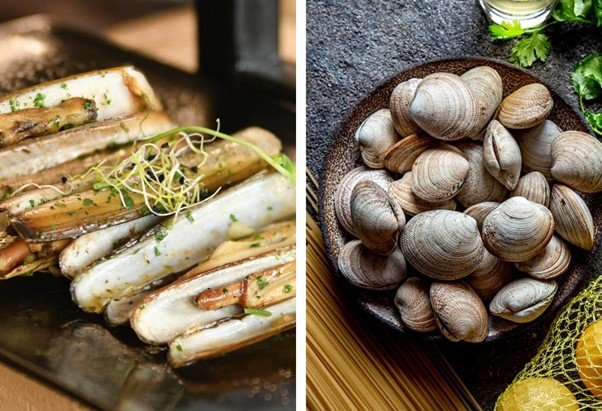
We have a few species of clam in the UK: razor clams are the long almost rectangular ones and get their name from looking like the old-fashioned cutthroat razor blades people use to shave with. Clams will often hear you coming as you approach and bury themselves into the sand. I picked up a nice trick off TheFishLocker for catching these: look for the little air holes in the sand and pour regular table salt into it. If there’s a clam under the hole, you can watch the hole reform as it tries to get rid of the salt. Keep going with the salt until the clam pops out. Of course, you can use clams for clam chowder but they’re also great steamed and only take about 7 – 10 mins in a pot with a lid. The usual white wine and garlic works really well with these.

Whelks
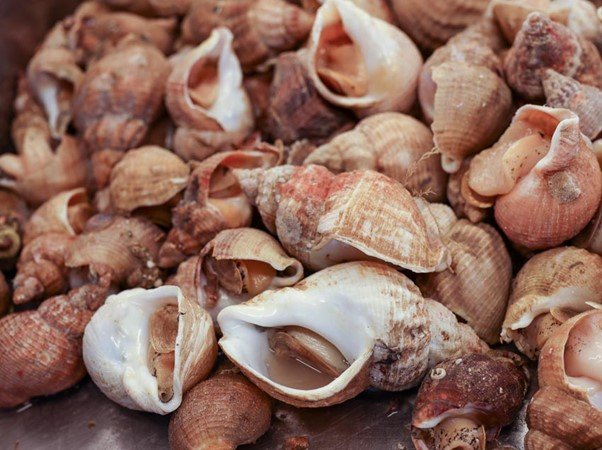
The calcium powerhouse of the sea, these are the marine snails with the pretty swirling pointy shells. I recommend extra washing for these and a couple of hours soaking, then boiling in salt water for 10-15 minutes. A simple garlic butter makes these a real show stopper at dinner parties.

The Weeds

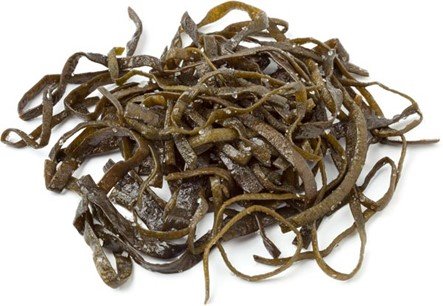
Humble seaweed is sometimes overlooked or thought of as too smelly or strong. In fact, there are more than 650 species of seaweeds on our shores, and many of them are delicious, tender and not at all pungent. Seaweed is absolutely cram-packed full of vitamins and minerals which is probably why so many health food companies are now jumping on the seaweed wagon to sell us expensive seaweed preparations and supplements.

Of course, on the coast you can harvest seaweed for free! It’s easy to identify and rocky shores are absolutely abundant with it, so you’ll never come home empty handed. All species that you collect from the shore are edible, although some are better to eat than others. Take care to collect live weeds that are still attached to the rock from an area where the sea has washed over the weeds in the last day. Wash the seaweed very well before use.

 Seaweed is a valuable part of our shores: it provides essential habitat and food for a lot of marine life, offering shelter and breeding grounds; it helps improve water quality by absorbing excess nutrients; it absorbs carbon dioxide and it helps protect shorelines from erosion. For those reasons and more, we need to look after the weeds which means taking care when we harvest them. They cling onto rocks by holdfasts and we need to leave those holdfasts in place together with plenty of the stem (stipe) so the seaweed can regrow.

Some of my favourite tasty seaweeds include Sea Lettuce thrown raw into a salad, Sea Spaghetti cooked and eaten a bit like pasta, Dulse thrown into my morning omelette and Channelled Wrack chucked into a stir fry. I recommend subscribing to the Forager Helper for guidance on seaweed identification.

In my next post, I’ll encourage you to venture into the shallow waters to forage for even bigger bounties: crabs, lobster, spider crabs, kina, and octopus.

All images licensed through Envato.
Share this:

  • Share on Facebook (Opens in new window) Facebook
  • Share on X (Opens in new window) X

Like this:

Like Loading…

Related

12 August 2024/0 Comments/by Gavin
Tags: blog, Coastal, foraging, FoundFood, wild food
Share this entry
  • Share on Facebook
  • Share on X
  • Share on WhatsApp
  • Share on LinkedIn
  • Share by Mail
https://foundfood.com/wp-content/uploads/2024/07/Seaweed.jpg 306 443 Gavin https://foundfood.com/wp-content/uploads/2024/05/Found_Food_Foraging_newlogo-300x158.png Gavin2024-08-12 11:37:592024-07-30 16:58:28Foraging on the Coastline – Part 3
You might also like
Large Birch Polypore A Definition of Foraging
Lime or Linden Tree Flowers – Tilia x europea
3 Things You Can Forage For In April
Foraging the Edges of Epping Forest in Winter
Birch Polypore (Fomitopsis betulina – formerly Pitptoporus betulinus)
What on Earth is Bletting?
Sloe dumplings Sloe, Sloe, Sloe!
A Video about Crow Garlic
0 replies

Leave a Reply

Want to join the discussion?
Feel free to contribute!

Leave a Reply Cancel reply

Your email address will not be published. Required fields are marked *

Search Search

Categories

  • 2017
  • 2018
  • 2024
  • 2025
  • Aegopodium podograria
  • Alliaria petiolata
  • Allium
  • Allium ursinum
  • Allium vineale
  • Allium vineale
  • April
  • Artemisia vulgaris
  • Asteraceae
  • August
  • Auricularia auricula-judae
  • Autumn
  • Ballota nigra
  • Berries
  • Boletus edulis
  • Calocybe gambosa
  • Cardamine hirsuta
  • Castanea sativa
  • Chamaenerion
  • Chamaenerion
  • Chamaenerion angustifolium
  • Cirsium vulgare
  • Coastal
  • Conopodium
  • Conopodium majus
  • Coprinus comatus
  • Crataegus
  • Crataegus monogyna
  • February
  • Flowers
  • Foraging
  • Fragaria vesca
  • Fungus
  • General
  • Geranium molle
  • Glechoma
  • Glechoma hederacea
  • Grifola frondosa
  • Inula helenium
  • January
  • June
  • Juniperus
  • Lamium album
  • Lamium purpureum
  • Larix
  • Larix decidua
  • Larix larcina
  • Lavandula
  • Leaves
  • Mahonia aquifolium
  • March
  • Medicine
  • Melissa
  • Melissa officinalis
  • October
  • Onagraceae
  • Picea
  • Picea abies
  • Picea glauca
  • Picea sitchensis
  • Pinus contorta
  • Pinus strobus
  • Plants
  • Platanus x acerifolia
  • Prunella
  • Prunella vulgaris
  • Prunus
  • Prunus spinosa
  • Rabelera
  • Recipe
  • Reynoutria
  • Reynoutria japonica
  • Ribes
  • Ribes rubrum
  • Roots
  • Rosa canina
  • Rosaceae
  • Rumex acetosa
  • Rumex crispus
  • Sambucus nigra
  • Sarcoscypha coccinea
  • Sequoia
  • Sequoia sempervirens
  • Sequoiadendron
  • Silene
  • Silene dioica
  • Smyrnium olusatrum
  • Solanum
  • Solanum americanum
  • Spring
  • Stachys
  • Stachys sylvatica
  • Stellaria
  • Stellaria media
  • Stellaria nemorum
  • Summer
  • Survival
  • Symphytum officinale
  • Symphytum x uplandicum
  • Taraxacum
  • Taraxacum officinale
  • Thuja occidentalis
  • Thuja plicata
  • Tilia
  • Tilia cordata
  • Tree
  • Tsuga
  • Tsuga canadensis
  • Tsuga heterophylla
  • Tussilago farfara
  • Typha angustifolia
  • Typha latifolia
  • Uncategorised
  • Urtica dioica
  • Urticaceae
  • Video
  • wildlife
  • Winter
Privacy & Cookies: This site uses cookies. By continuing to use this website, you agree to their use.

To find out more, including how to control cookies, see here: Cookie Policy

FoundFood

  • Home
  • Contact
  • About

Helper Sites

  • The Forager Helper
  • The Wild Herbalist Helper (coming soon…)

Courses and Walks

    • Face-to-face experiences
    • Private events
    • Online Courses
    • FREE Weekly Foraging Zoom Calls


Publications

    • Publications
    • Newsletter


Trustpilot
© Copyright - Found Food
  • Link to Instagram
  • Link to Facebook
  • Link to Youtube
  • Terms of Service
  • Privacy Policy
Link to: Foraging on the Coastline – Part 2 Link to: Foraging on the Coastline – Part 2 Foraging on the Coastline – Part 2 Link to: Foraging on the Coastline – Part 4 Link to: Foraging on the Coastline – Part 4 Foraging on the Coastline – Part 4
Scroll to top Scroll to top Scroll to top

This site uses cookies. By continuing to browse the site, you are agreeing to our use of cookies.

Accept settingsHide notification onlySettings

Cookie and Privacy Settings


How we use cookies

We may request cookies to be set on your device. We use cookies to let us know when you visit our websites, how you interact with us, to enrich your user experience, and to customize your relationship with our website.

Click on the different category headings to find out more. You can also change some of your preferences. Note that blocking some types of cookies may impact your experience on our websites and the services we are able to offer.

Essential Website Cookies

These cookies are strictly necessary to provide you with services available through our website and to use some of its features.

Because these cookies are strictly necessary to deliver the website, refusing them will have impact how our site functions. You always can block or delete cookies by changing your browser settings and force blocking all cookies on this website. But this will always prompt you to accept/refuse cookies when revisiting our site.

We fully respect if you want to refuse cookies but to avoid asking you again and again kindly allow us to store a cookie for that. You are free to opt out any time or opt in for other cookies to get a better experience. If you refuse cookies we will remove all set cookies in our domain.

We provide you with a list of stored cookies on your computer in our domain so you can check what we stored. Due to security reasons we are not able to show or modify cookies from other domains. You can check these in your browser security settings.

Other external services

We also use different external services like Google Webfonts, Google Maps, and external Video providers. Since these providers may collect personal data like your IP address we allow you to block them here. Please be aware that this might heavily reduce the functionality and appearance of our site. Changes will take effect once you reload the page.

Google Webfont Settings:

Google Map Settings:

Google reCaptcha Settings:

Vimeo and Youtube video embeds:

Privacy Policy

You can read about our cookies and privacy settings in detail on our Privacy Policy Page.

Privacy Policy
Accept settingsHide notification only

Loading Comments...

    %d