• Link to Instagram
  • Link to Facebook
  • Link to Youtube
  • Sign Up For Our Newsletter And Get A Free Foraging Guide!
Found Food
  • Home
  • Foraging Books
    • The Wild Mixologist: Cocktails & Mocktails
    • The Bushcrafter’s Guide to Foraging
    • UK Seasonal Foraging Books
    • The Forager’s Introduction to Botany
  • Online Courses
    • Getting Started Foraging for Wild Food
    • Wild Food & ID Masterclass
    • Wild Cocktails Course
  • Book Foraging Experiences
  • About
    • FAQs
    • The Association of Foragers
    • Testimonials
    • Blog
  • Contact Us
  • Click to open the search input field Click to open the search input field Search
  • Menu Menu

Foraging on the Coastline – Part 1

2024, Coastal

Jen Wiss-Carline is a speara and keen coastal forager. In this series of posts, she shares some tips on how to make the most of the free food waiting to be found along our shores.

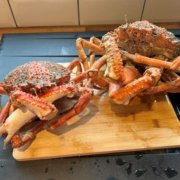
When I was a little girl, I used to love filling my plastic bucket with sea creatures for my mum to cook up. There was something extremely satisfying about finding juicy big cockles and mussels to bring a huge smile to her face, and she always made them smell wonderful. Now, as an adult, the soaring cost of food in supermarkets has provided me with a strong motivation to explore new ways to fill my table and freezer.

Whether you’re lucky enough to live near the coast or just visit occasionally, the ocean’s larder is always full of fresh, delicious and free food to forage, from crustaceans and molluscs to the mighty and often-overlooked seaweeds. It’s a great family day out with a lot of learning opportunities and the kids will love the thrill of finding you something to cook.

In this series of blog posts, I hope to inspire you to explore the shore, fill your buckets with tasty treats, and add the coastline to your list of favourite foraging haunts.

Rules and regulations

Before you venture to your nearest rocky shore in the search for tasty goodies, be aware that the Inshore Fisheries and Conservation Authorities (IFCA) make bylaws for all coastal regions in England which set out minimum sizes for taking shellfish to ensure that populations can reproduce before being harvested. You can check which IFCA region you fall under on this map, and there are links to the regional policies at the bottom of this page. In Wales, you can check the Natural Resources Wales for rules (have a quick search by species).

Please don’t take more than you need – we are lucky that this supply of mouthwatering free food isn’t overly regulated at the moment, and foraging sustainably helps to keep it that way.

Gear

If you’re staying on dry land, I recommend taking a knife and some catch bags with you, and waterproof shoes such as wellies or crocs – the rocks can be painful with bare feet. A rake is also helpful for foraging cockles. Check the tide times before you go – you want the tide to be going out so you can explore what has been left around the sea bed and rocky areas (I’ll get to more adventurous options later).  Ideally you want a spring tide which occur during full and new moons. This is when the gravitational forces of the Moon and the Sun align, either pulling together (new moon) or pulling in opposite directions (full moon), resulting in the most significant tidal ranges. This unearths much more of the sea bed than a typical tide and will be most productive.  Be sure to keep an eye on the incoming tide and don’t get cut off by it.

Before cooking

For all your foraged seafood, make sure you wash it very well in cold water before you cook it to get rid of sand and dirt. Some seafood such as whelks will also benefit from a couple of hours soaking too.

Cockles
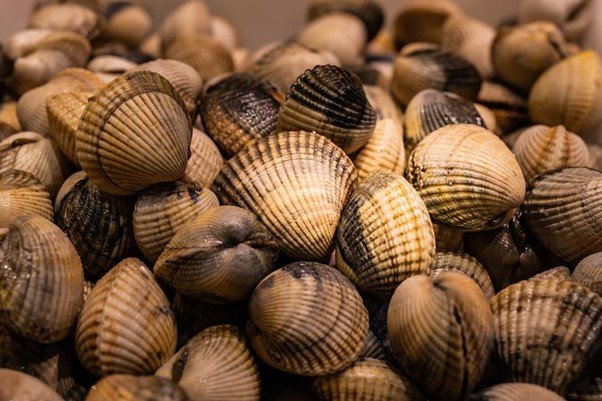
Starting with my childhood favourite, cockles are so delicious and incredibly healthy, packed with protein.

They tend to lie a couple of inches below the sand for which a rake is a really handy tool to drag them up, although you might find some above. They must be foraged alive so their shells should be closed and they shouldn’t smell bad. If you find an open one, give it a tap on a hard surface to see if it closes up – otherwise discard. Cockles are best steamed by adding a cup of water to a large pan with a lid. You can add a splash of lemon if you want to. They take just a couple of minutes and their shells should pop open – otherwise get rid.

Mussels

Mussels are easy pickings to be found on the rocks, hanging on tightly by their little strings (“the beard”). Make sure they’re closed shut when you find them, and either twist them off or use a short knife to get underneath.

Before cooking, spend some time cleaning each one: cut off the beard and scrape off any small barnacles from their shells. This will ensure there is not grit in broth. There’s no shortage of very simple steamed mussel recipes to be found, ranging from white wine, butter and garlic broth to coconut milk, fresh coriander and sliced chillies. Most seafood recipes are interchangeable with other shellfish and literally take minutes to execute. Make sure the shells opens when you cook them – otherwise discard those that don’t.

In my next post, I’ll introduce three more of my coastal foraging favorites: winkles, scallops, and oysters. Get your bucket and wellies ready for a real teatime treat!All images licensed through Envato.
Share this:

  • Share on Facebook (Opens in new window) Facebook
  • Share on X (Opens in new window) X

Like this:

Like Loading…

Related

30 July 2024/0 Comments/by Gavin
Tags: blog, Coastal, foraging, FoundFood, wild food
Share this entry
  • Share on Facebook
  • Share on X
  • Share on WhatsApp
  • Share on LinkedIn
  • Share by Mail
https://foundfood.com/wp-content/uploads/2024/07/Mussles.jpg 401 602 Gavin https://foundfood.com/wp-content/uploads/2024/05/Found_Food_Foraging_newlogo-300x158.png Gavin2024-07-30 16:49:512024-07-30 16:49:53Foraging on the Coastline – Part 1
You might also like
Forage close to home
Dandelion Root "Coffee" Cake Roasted Dandelion Root “Coffee” Cake
My Standard Foraging Pack
3 Things You Can Forage For In June
What on Earth is Bletting?
Identifying Trees in Winter
The Parts of a Flower
Judas’ Ear Mushroom (Auricularia auricula-judae)
0 replies

Leave a Reply

Want to join the discussion?
Feel free to contribute!

Leave a Reply Cancel reply

Your email address will not be published. Required fields are marked *

Search Search

Categories

  • 2017
  • 2018
  • 2024
  • 2025
  • Aegopodium podograria
  • Alliaria petiolata
  • Allium
  • Allium ursinum
  • Allium vineale
  • Allium vineale
  • April
  • Artemisia vulgaris
  • Asteraceae
  • August
  • Auricularia auricula-judae
  • Autumn
  • Ballota nigra
  • Berries
  • Boletus edulis
  • Calocybe gambosa
  • Cardamine hirsuta
  • Castanea sativa
  • Chamaenerion
  • Chamaenerion
  • Chamaenerion angustifolium
  • Cirsium vulgare
  • Coastal
  • Conopodium
  • Conopodium majus
  • Coprinus comatus
  • Crataegus
  • Crataegus monogyna
  • February
  • Flowers
  • Foraging
  • Fragaria vesca
  • Fungus
  • General
  • Geranium molle
  • Glechoma
  • Glechoma hederacea
  • Grifola frondosa
  • Inula helenium
  • January
  • June
  • Juniperus
  • Lamium album
  • Lamium purpureum
  • Larix
  • Larix decidua
  • Larix larcina
  • Lavandula
  • Leaves
  • Mahonia aquifolium
  • March
  • Medicine
  • Melissa
  • Melissa officinalis
  • October
  • Onagraceae
  • Picea
  • Picea abies
  • Picea glauca
  • Picea sitchensis
  • Pinus contorta
  • Pinus strobus
  • Plants
  • Platanus x acerifolia
  • Prunella
  • Prunella vulgaris
  • Prunus
  • Prunus spinosa
  • Rabelera
  • Recipe
  • Reynoutria
  • Reynoutria japonica
  • Ribes
  • Ribes rubrum
  • Roots
  • Rosa canina
  • Rosaceae
  • Rumex acetosa
  • Rumex crispus
  • Sambucus nigra
  • Sarcoscypha coccinea
  • Sequoia
  • Sequoia sempervirens
  • Sequoiadendron
  • Silene
  • Silene dioica
  • Smyrnium olusatrum
  • Solanum
  • Solanum americanum
  • Spring
  • Stachys
  • Stachys sylvatica
  • Stellaria
  • Stellaria media
  • Stellaria nemorum
  • Summer
  • Survival
  • Symphytum officinale
  • Symphytum x uplandicum
  • Taraxacum
  • Taraxacum officinale
  • Thuja occidentalis
  • Thuja plicata
  • Tilia
  • Tilia cordata
  • Tree
  • Tsuga
  • Tsuga canadensis
  • Tsuga heterophylla
  • Tussilago farfara
  • Typha angustifolia
  • Typha latifolia
  • Uncategorised
  • Urtica dioica
  • Urticaceae
  • Video
  • wildlife
  • Winter
Privacy & Cookies: This site uses cookies. By continuing to use this website, you agree to their use.

To find out more, including how to control cookies, see here: Cookie Policy

FoundFood

  • Home
  • Contact
  • About

Helper Sites

  • The Forager Helper
  • The Wild Herbalist Helper (coming soon…)

Courses and Walks

    • Face-to-face experiences
    • Private events
    • Online Courses
    • FREE Weekly Foraging Zoom Calls


Publications

    • Publications
    • Newsletter


Trustpilot
© Copyright - Found Food
  • Link to Instagram
  • Link to Facebook
  • Link to Youtube
  • Terms of Service
  • Privacy Policy
Link to: Using Free Wild Food to Supplement Your Diet, Improve Health, and Save Money Link to: Using Free Wild Food to Supplement Your Diet, Improve Health, and Save Money Using Free Wild Food to Supplement Your Diet, Improve Health, and Save Mone... Link to: Foraging on the Coastline – Part 2 Link to: Foraging on the Coastline – Part 2 Foraging on the Coastline – Part 2
Scroll to top Scroll to top Scroll to top

This site uses cookies. By continuing to browse the site, you are agreeing to our use of cookies.

Accept settingsHide notification onlySettings

Cookie and Privacy Settings


How we use cookies

We may request cookies to be set on your device. We use cookies to let us know when you visit our websites, how you interact with us, to enrich your user experience, and to customize your relationship with our website.

Click on the different category headings to find out more. You can also change some of your preferences. Note that blocking some types of cookies may impact your experience on our websites and the services we are able to offer.

Essential Website Cookies

These cookies are strictly necessary to provide you with services available through our website and to use some of its features.

Because these cookies are strictly necessary to deliver the website, refusing them will have impact how our site functions. You always can block or delete cookies by changing your browser settings and force blocking all cookies on this website. But this will always prompt you to accept/refuse cookies when revisiting our site.

We fully respect if you want to refuse cookies but to avoid asking you again and again kindly allow us to store a cookie for that. You are free to opt out any time or opt in for other cookies to get a better experience. If you refuse cookies we will remove all set cookies in our domain.

We provide you with a list of stored cookies on your computer in our domain so you can check what we stored. Due to security reasons we are not able to show or modify cookies from other domains. You can check these in your browser security settings.

Other external services

We also use different external services like Google Webfonts, Google Maps, and external Video providers. Since these providers may collect personal data like your IP address we allow you to block them here. Please be aware that this might heavily reduce the functionality and appearance of our site. Changes will take effect once you reload the page.

Google Webfont Settings:

Google Map Settings:

Google reCaptcha Settings:

Vimeo and Youtube video embeds:

Privacy Policy

You can read about our cookies and privacy settings in detail on our Privacy Policy Page.

Privacy Policy
Accept settingsHide notification only

Loading Comments...

    %d