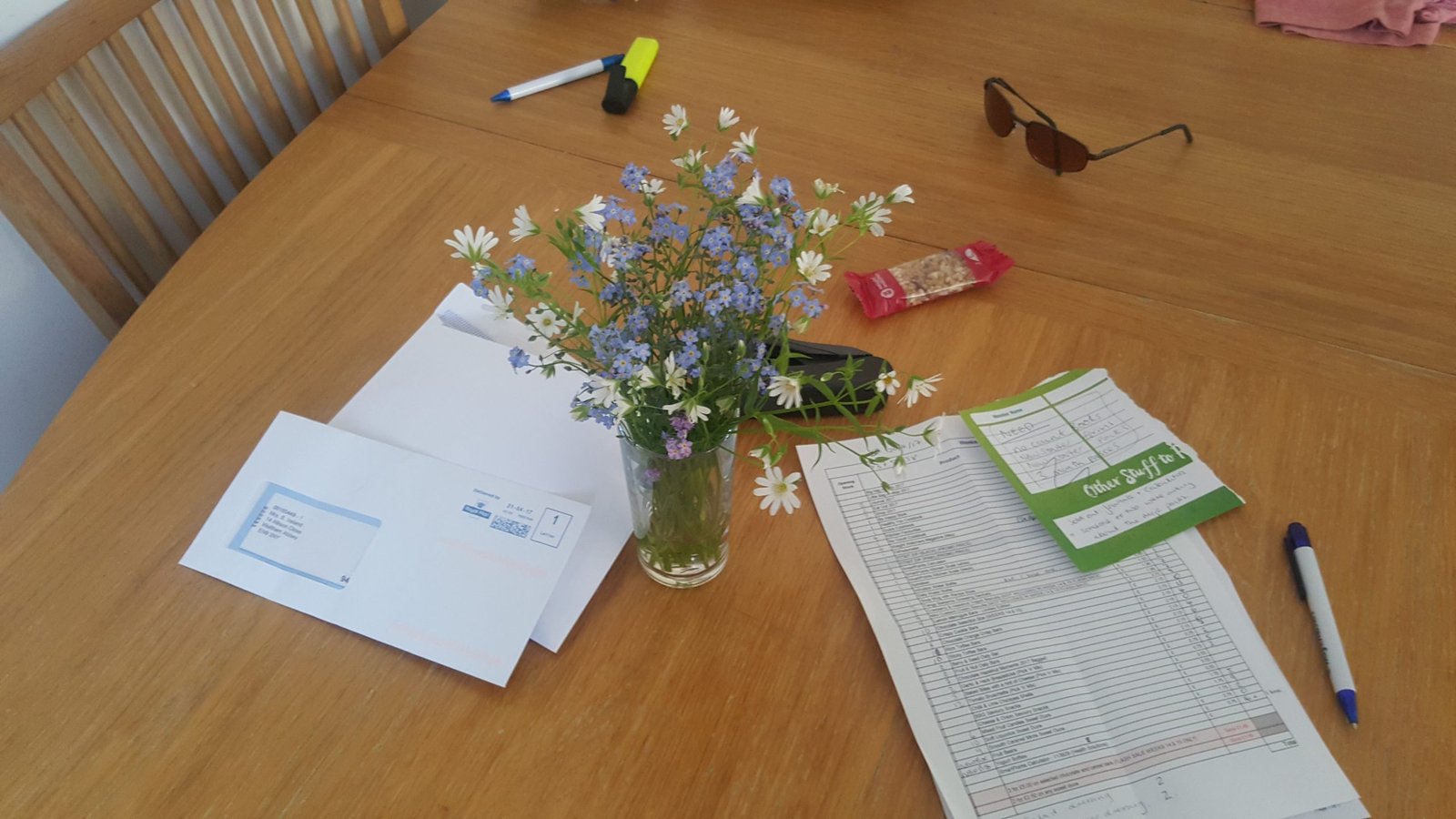
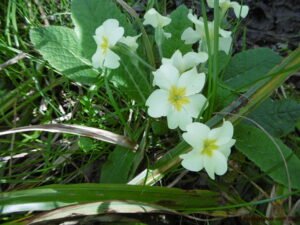
I came across some edible wild flowers on a walk, and they reminded me of my wife, so I brought a few home for her to brighten up her desk. Pretty flowers for my gorgeous wife, Samantha.
Edible Wild Flowers
So hopefully they’ll provide some inspiration whilst she works; and if she gets peckish, she can have a little much on Forget-Me-Not and Greater Stitchwort.
Given the time of year, we all know that the countryside is full of green and flowers, I was out looking for edibles when I came across these edible hedgerow beauties, so I thought I’d share these spring flowers with you.
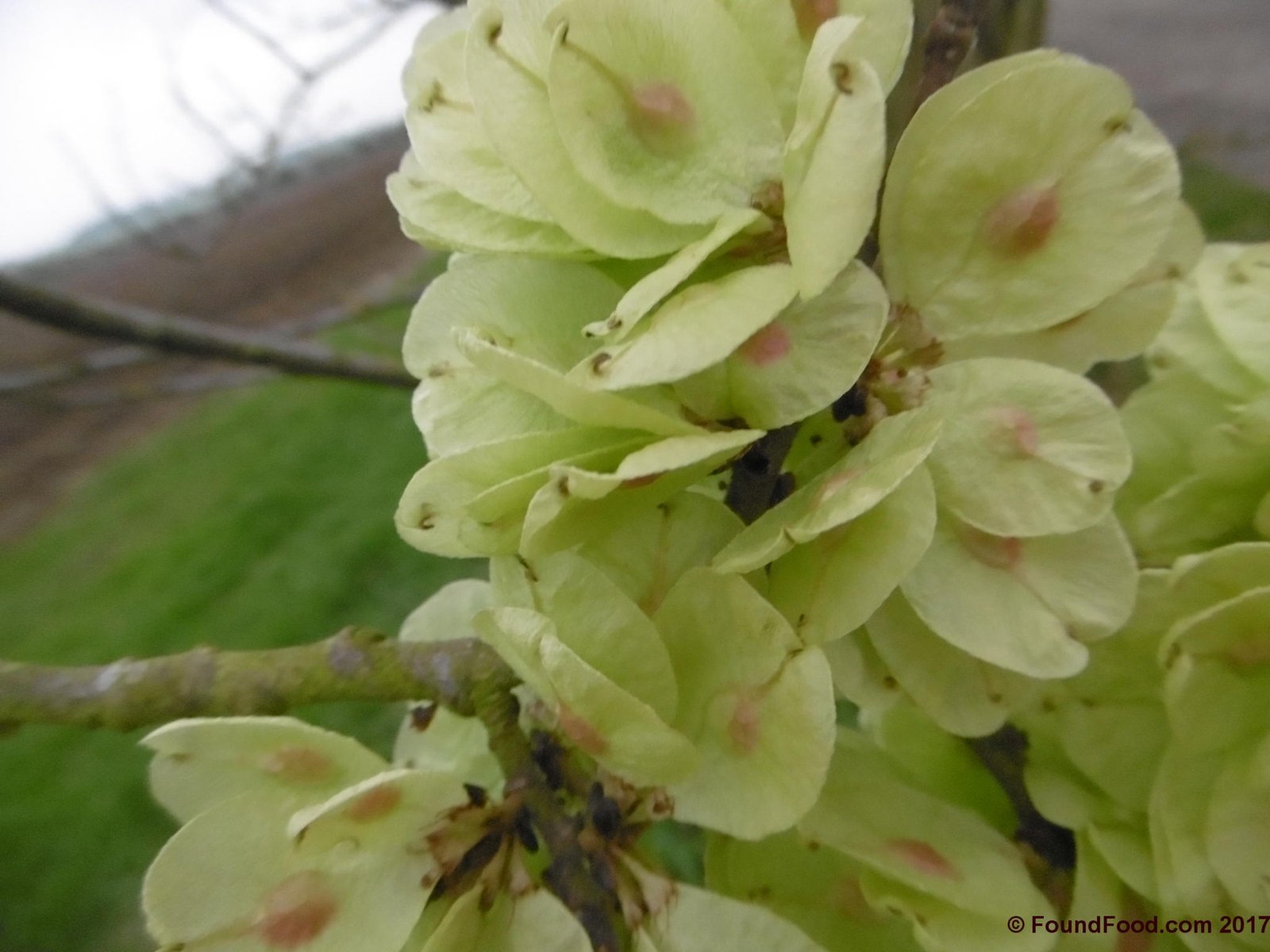
Wych Elm (Ulmus glabra) spring flowers
First up is the Wych Elm. This tree, with one of the prettiest flower bunches over also has a great many uses. Sticking with the edibility, the young leaves are edible (raw or cooked), the inner bark has been dried and used to thicken stews, and the seeds are also edible.
Greater Stitchwort (Stellaria holostea)
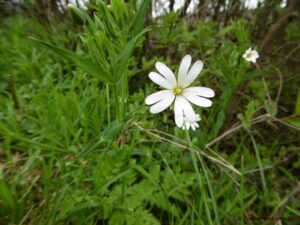
Greater Stitchwort is one of those anonymous white spring flowers in the hedgerow or on the side of the road that largely gets ignored. Until you take a closer look, that is.
Hedgerow Beauties – Greater Stitchwort
The flower is made up of five white petals, lobed so deeply that they look like ten petals. Five green sepals support them, and the stamens are yellow tipped, growing from a green centre. The green parts look very much like grass before the flowers open, apart from the fact that the edges feel quite rough; As does the stem, which has a square cross-section.
The green shoots, flower buds and flowers are all edible raw and cooked. You can chop them straight into a salad.
Forget-Me-Not (Genus Myosotis)
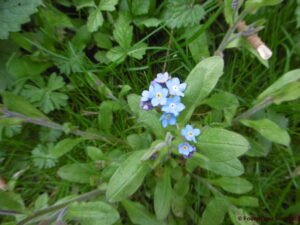
Forget-me-nots are tiny blue spring flowers which you could easily walk by, if it wasn’t for the striking contrast of the blue against a green background.
Forget-me-nots
Forget-me-not covers about 74 species, but the flowers are usually pink/purple in the bud, turning blue when they open. The flowers have five petals, five sepals, yellow centres and are under one cm across. The leaves are long, thin, and unstalked. The stems are hairy, and the leaves are also hairy sometimes.
The flowers are edible and you can eat them as a walking snack, to decorate cakes, and in salads.
Primrose (Primula vulgaris)
Sometimes, with these wild flowers, it’s hard to believe that they’re not cultivated because they look so perfect, and in my opinion, the Primrose is one of those.
Wild Primrose
Easy to recognise, Primula vulgaris has a rosette of crinkly, tongue-shaped leaves that are so wrinkled that they look old even when new. Each flower grows from it’s own stem (which has fine hairs) and has five pale yellow petals, with a darker yellow centre. Sometimes, the darker yellow centre forms a pentagram.
WARNING: I’ve eaten the flowers raw, and the leaves both raw and cooked, yet some people have reported that the leaves have caused a rash. It’s worth checking first, and if the leaves do cause a rash or any kind of contact dermatitis, definitely do not eat it.
We may request cookies to be set on your device. We use cookies to let us know when you visit our websites, how you interact with us, to enrich your user experience, and to customize your relationship with our website.
Click on the different category headings to find out more. You can also change some of your preferences. Note that blocking some types of cookies may impact your experience on our websites and the services we are able to offer.
Essential Website Cookies
These cookies are strictly necessary to provide you with services available through our website and to use some of its features.
Because these cookies are strictly necessary to deliver the website, refusing them will have impact how our site functions. You always can block or delete cookies by changing your browser settings and force blocking all cookies on this website. But this will always prompt you to accept/refuse cookies when revisiting our site.
We fully respect if you want to refuse cookies but to avoid asking you again and again kindly allow us to store a cookie for that. You are free to opt out any time or opt in for other cookies to get a better experience. If you refuse cookies we will remove all set cookies in our domain.
We provide you with a list of stored cookies on your computer in our domain so you can check what we stored. Due to security reasons we are not able to show or modify cookies from other domains. You can check these in your browser security settings.
Other external services
We also use different external services like Google Webfonts, Google Maps, and external Video providers. Since these providers may collect personal data like your IP address we allow you to block them here. Please be aware that this might heavily reduce the functionality and appearance of our site. Changes will take effect once you reload the page.
Google Webfont Settings:
Google Map Settings:
Google reCaptcha Settings:
Vimeo and Youtube video embeds:
Privacy Policy
You can read about our cookies and privacy settings in detail on our Privacy Policy Page.